



Local Resident
Proud
Members Of






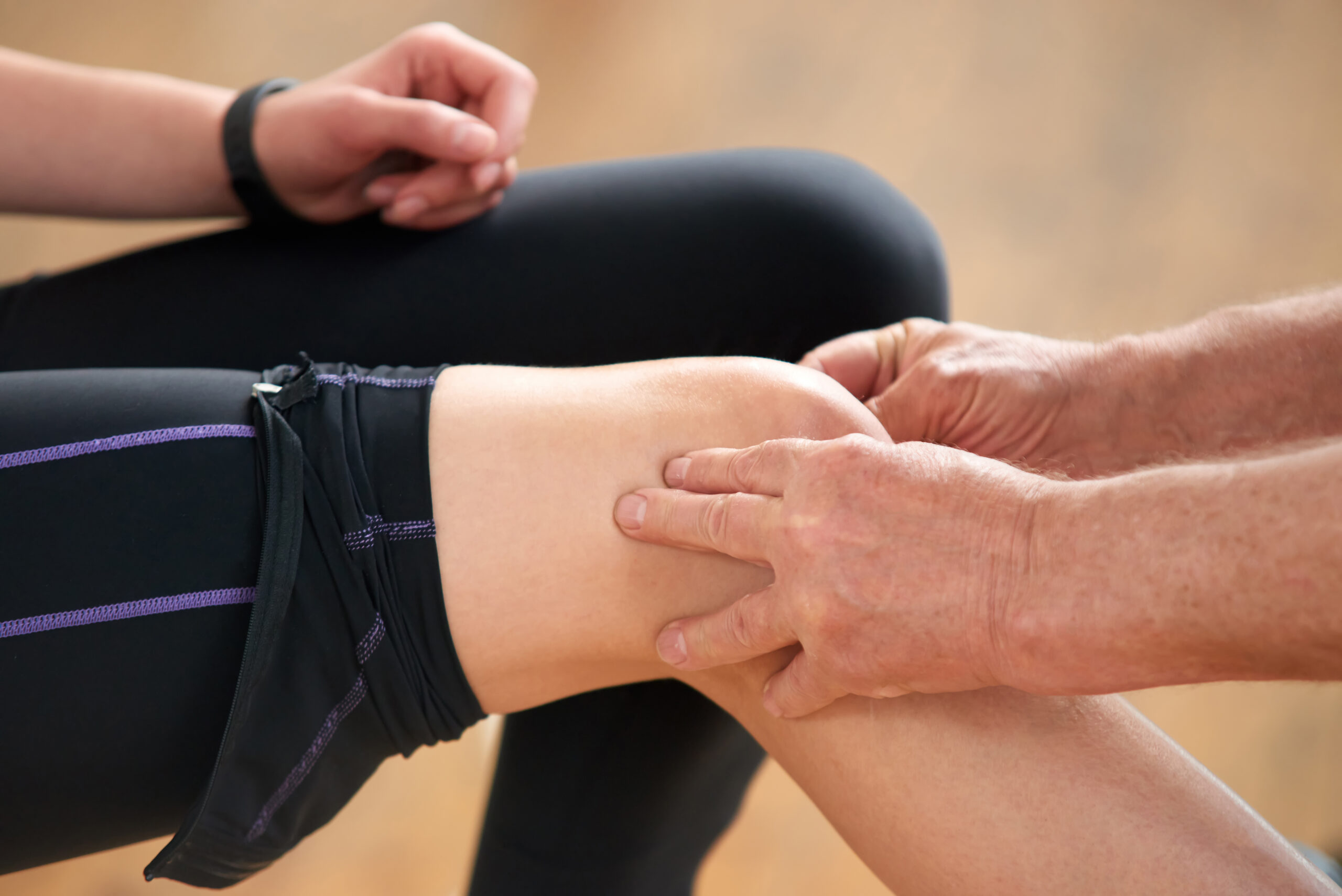
Knee ligament injuries are typically caused by some impact to the knee or the legs near the knees. For instance, you could trip and fall, landing on the kneecap. You might get hit on the side of the leg when crossing the street by a vehicle.
Physiotherapy First can help with your knee ligament treatment in Brampton with our physiotherapy treatments and services. We use a unique approach to not only treat your injuries but also the underlying symptoms and causes for an effective recovery treatment plan.
The most common knee ligament injury is ripping and tearing the MCL – the medial collateral ligament. MCL injuries are typical in sports when the leg is forced to move sideways more than it should. An MCL injury can also occur when one falls, and there is excessive force placed on the leg, causing it to bend outward and tear the ligament.
Another type of knee ligament injury is tears and rips in the LCL – the lateral collateral ligament, located on the back of the knee, opposite the knee cap. LCL injuries occur when the leg is forced outward in a direction away from the body. Injuries to the LCL can also occur if the leg is bent backward beyond its normal range of motion.
Impacts are another cause of knee ligament injuries. When the knee is impacted with excessive force, it can tear and rip the ligaments. Impact injuries can occur from car accidents, workplace accidents, tripping and falling accidents, banging your knee into a stationary object, etc.
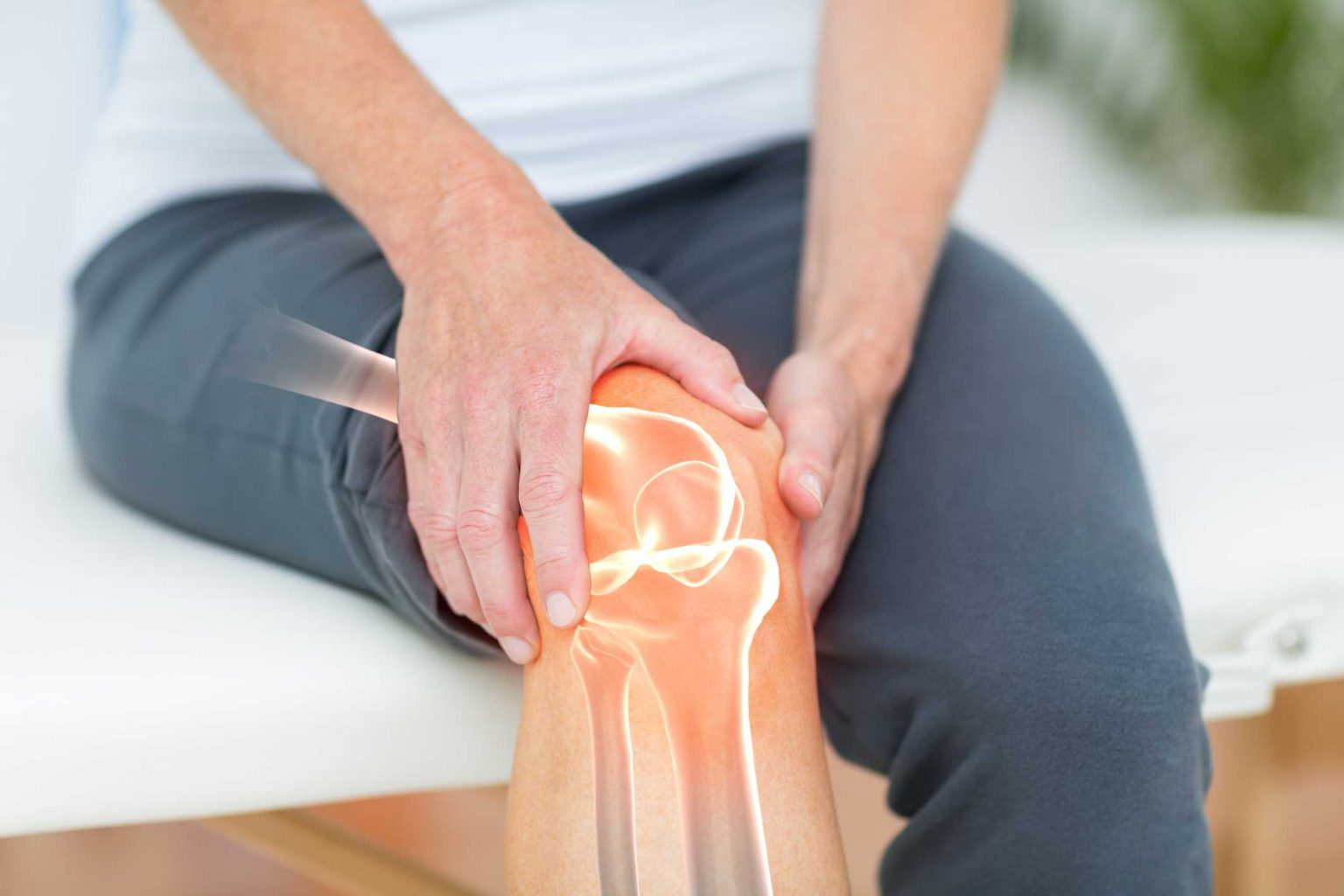
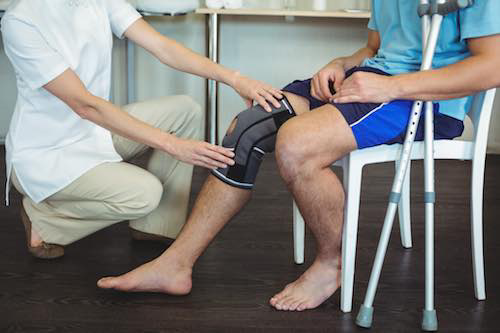

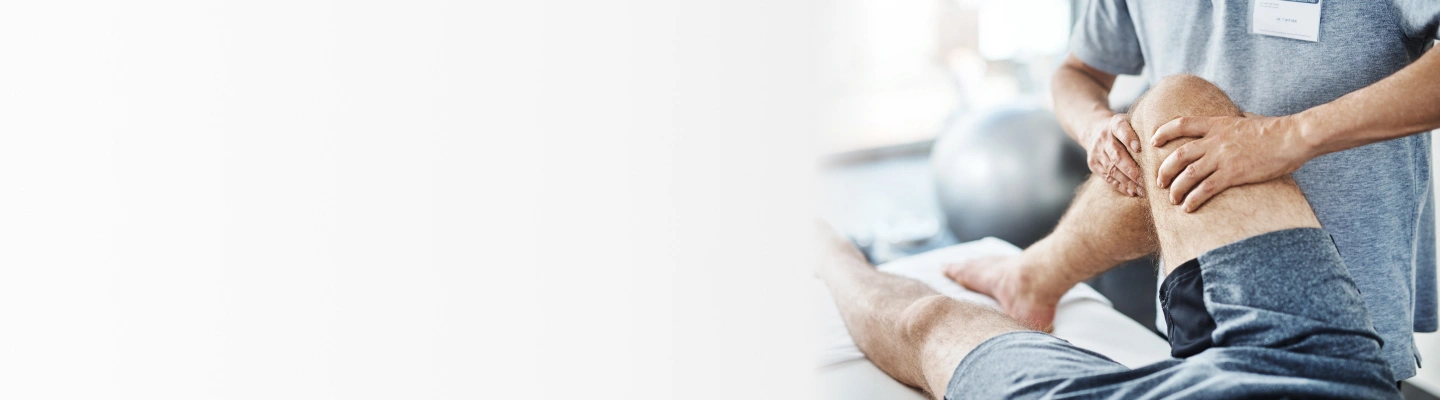
Most people know when they have injured their knee based on the symptoms. A formal diagnosis does require a detailed physical examination. At Physiotherapy First, our physiotherapists will review the extent of the injuries to identify which ligaments are ripped and torn.


They may ask you to perform various mobility movements, touch and feel the affected area, and ask you to rate the level of pain. Your physiotherapist may also take X-rays and use other diagnostic tests. Once your injury is accurately diagnosed, a formal Brampton knee ligament treatment plan tailored to your injury is created.

Our physiotherapists will take the time to educate you about your injury, as well as ask for your input when creating your treatment and recovery plan.
The form for knee ligament treatment in Brampton can and does vary from one patient to the next. Some of the more common treatments used to treat knee ligament injuries can include:
These therapies can help alleviate swelling and pain. They can be used individually or alternated depending on your diagnosis.
Small electrical impulses are used in the injury location to help stimulate the healing response, reduce pain and swelling, and promote healing processes.
You may need to have your leg elevated for specific periods of various durations. Elevation helps keep weight off the leg and prevents additional injuries.
Soft tissue manipulation can be used to massage the area to alleviate pain and discomfort.
After swelling and soreness dissipate, your knee ligament physiotherapy in Brampton will involve restrengthening the injured area through targeted exercises.
Assistive devices, like knee braces and crutches, are often used to help keep weight off the injured leg and keep the upper and lower leg bones from moving outside their normal range and causing reinjury.
Please keep in mind that the goal of your knee ligament care treatment in Brampton is to address your pain and discomfort and bring relief first and foremost. Once this has been addressed, other forms of therapy are used to promote healing and recovery.

We integrate physiotherapy and chiropractic care to provide you with comprehensive care.

We have registered and licensed therapists and chiropractors who ensure you return stronger than before.
We provide a dedicated, individualized session with our therapist for a thorough consultation.
Address: 511 Ray Lawson Blvd. Unit 4 & 5 Brampton ON L6Y 0N2
Phone: 905-796-6662
Fax: 905-796-6662
Email: info@physiotherapyfirst.ca
Hear from 500+ Patients Who Found Relief
Here are some Commonly Asked Questions
Ligaments, whether they are in the knee, ankle, wrist, neck, or another area of the body, are connective tissues that help hold the ends of connecting bones together. In the knee, there are two ligaments – one on each side of the knee to restrict side-to-side movements and connect the lower leg and upper leg bones together.
When the knee ligaments are injured, they are not able to provide the resistance to limit side-to-side movements. The bones in the upper and lower legs can also slip when walking. You may also notice bone-on-bone popping sounds because the ligaments cannot hold the bones in place, so they rub against the cartilage in the knee.