




Local Resident
Proud
Members Of










Have you ever been out walking or attending to your duties, and by the end of the day, you are feeling sharp heel pains that persist? Even though there are tons of causes of heel pain to us, one of the major causes is the condition known as Plantar Fasciitis. This is an illness or infection that happens due to inflammation of the thick band that runs across the bottom part of your foot. Known as the plantar fascia, the band connects the toes of your leg to the heel bone. At Physiotherapy First, we provide comprehensive plantar fasciitis treatment in Brampton to help you reclaim pain-free movement. Book an appointment with us if foot pain has been troubling you, and we will help you get back on your feet with a personalized treatment plan.
Plantar fasciitis is an aggravation of the fibrous tissue called the plantar fascia that links your heel bone to your toes on the bottom of your foot. The plantar fascia is a band that imitates the shape of a bowstring in that it supports the arch of the foot so that it absorbs all the shock produced by the impact when walking or standing. This provides enough support to the leg, enabling you to move freely.
However, sometimes the tension or stress being forced on this bowstring-like band becomes overwhelming. In such a situation, the pressure becomes too much, thus causing damage to the band. The damage starts in the form of minor tears that gradually develop to become a stretched tear. After the impact has hit the band repeatedly, an irritation will form and start causing the pain.
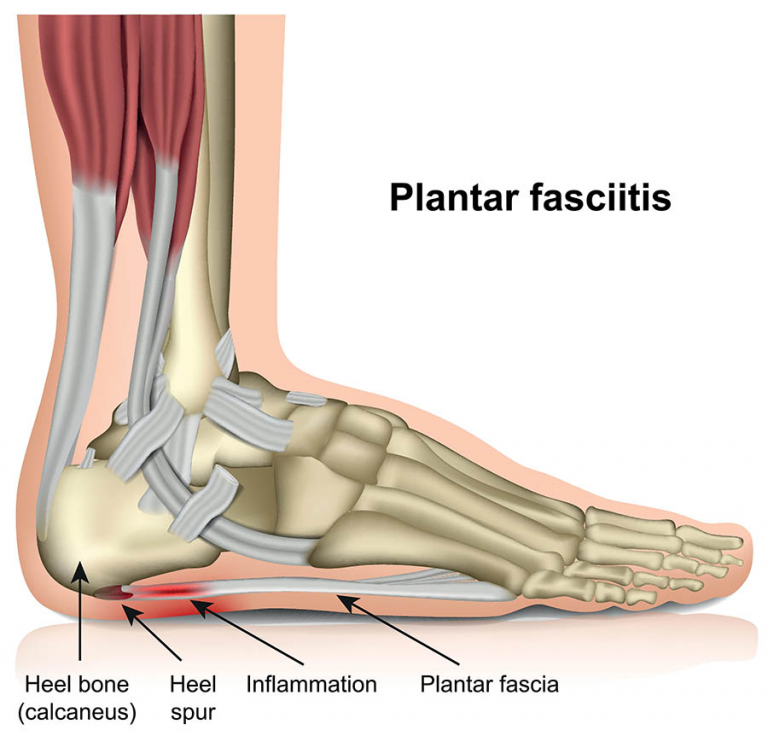
Excessive stress on the plantar fascia– Plantar fasciitis is a condition that causes severe heel discomfort. Excessive stress on the bottom of your foot can lead to small tears, inflammation and stiffness in the plantar fascia.
Age– Plantar Fasciitis is more common in people aged between 4 and 60.
Foot mechanics– Some foot features might contribute to the disease development. This includes flat feet, unusual walking patterns, and high arched feet. Such factors contribute to the abnormal distribution of weight to the foot when in an upright position.
Shoes– Some shoes do not have enough support to maintain a stable foot position when you are wearing them.
Obesity- Being overweight has also been associated with plantar Fasciitis. This is because the extra weight will put additional weight and stress on the plantar fascia.
Stressful exercises– The types of exercises you engage in – exercises that tend to add more stress to the plantar fascia. Exercises that can contribute to you getting the disease include long-distance running, aerobic dancing, ballet dancing, etc.
Your daily job– People who spend most of their time on their feet during the day, such as teachers and shop attendants.

One thing about this condition is that it is common among athletes. Especially the runners. Additionally, overweight people are also those people whose shoes aren’t well-balanced. However, one might wonder, what are some of the most common symptoms of plantar Fasciitis?
Here are some of the prevalent signs that you have heel and foot pain. But you must know that the pain might be felt in three parts.
It is common for Plantar Fasciitis patients to complain of sharp stabbing pains, especially when taking the first few steps in the morning. After this, the pains start to decrease gradually, eventually coming to a halt. However, the pain might come back again later in the day, especially if you have spent the better part of the day walking or standing for long hours.

Still part of physical therapy, Stretching exercises are helpful for tight tendons and muscles. Our Physiotherapist can show you how to execute heel stretching exercises even while you are at home.


Massage, physical therapy, and ultrasound therapy can all help to break up soft tissue adhesions. These therapies may help to lessen inflammation and pain. And we have the best at our Brampton facility to help you with all these.

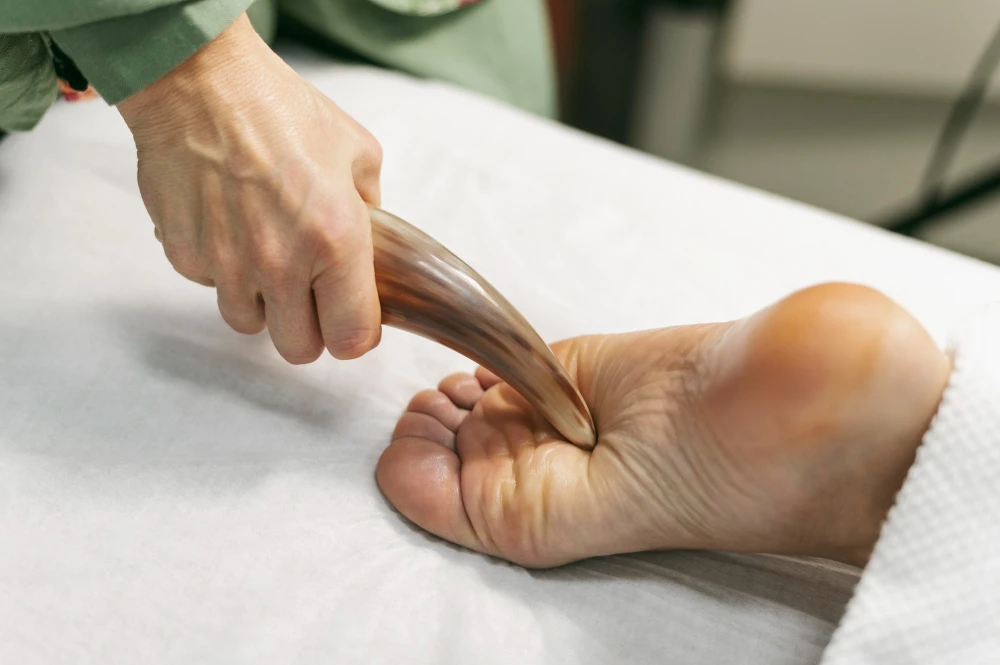
This involves hands-on manipulation of the affected joints or soft tissues. Manual therapy helps improve flexibility in the ankle and calf muscles.

Shop with therapy is the application of high-energy sound waves to the affected area. As this energy is absorbed by the cells, it triggers a healing response in chronic cases.

our clinic in Brampton brings together physiotherapy, chiropractic care, massage therapy, shockwave therapy and laser therapy under one roof.

We design your treatment plan specifically to address your symptoms, lifestyle, health goals, and recovery requirements.

Our team takes the time to explain the reason behind your condition and how you can prevent future triggers through lifestyle changes.
Address: 511 Ray Lawson Blvd. Unit 4 & 5 Brampton ON L6Y 0N2
Phone: 905-796-6662
Fax: 905-796-6662
Email: info@physiotherapyfirst.ca
Hear from 500+ Patients Who Found Relief
Here are some Commonly Asked Questions
Some of our patients receive ongoing physiotherapy treatments and services after their initial complaint has been addressed. Ongoing treatments and services can help prevent the plantar fasciitis condition from recurring and returning, as well as reduce the frequency of occurrences.
Plantar Fasciitis physiotherapy treatments and services provide a non-invasive, non-surgical, and natural method for treating your condition. For some patients, we can help them resolve their foot pain conditions naturally.